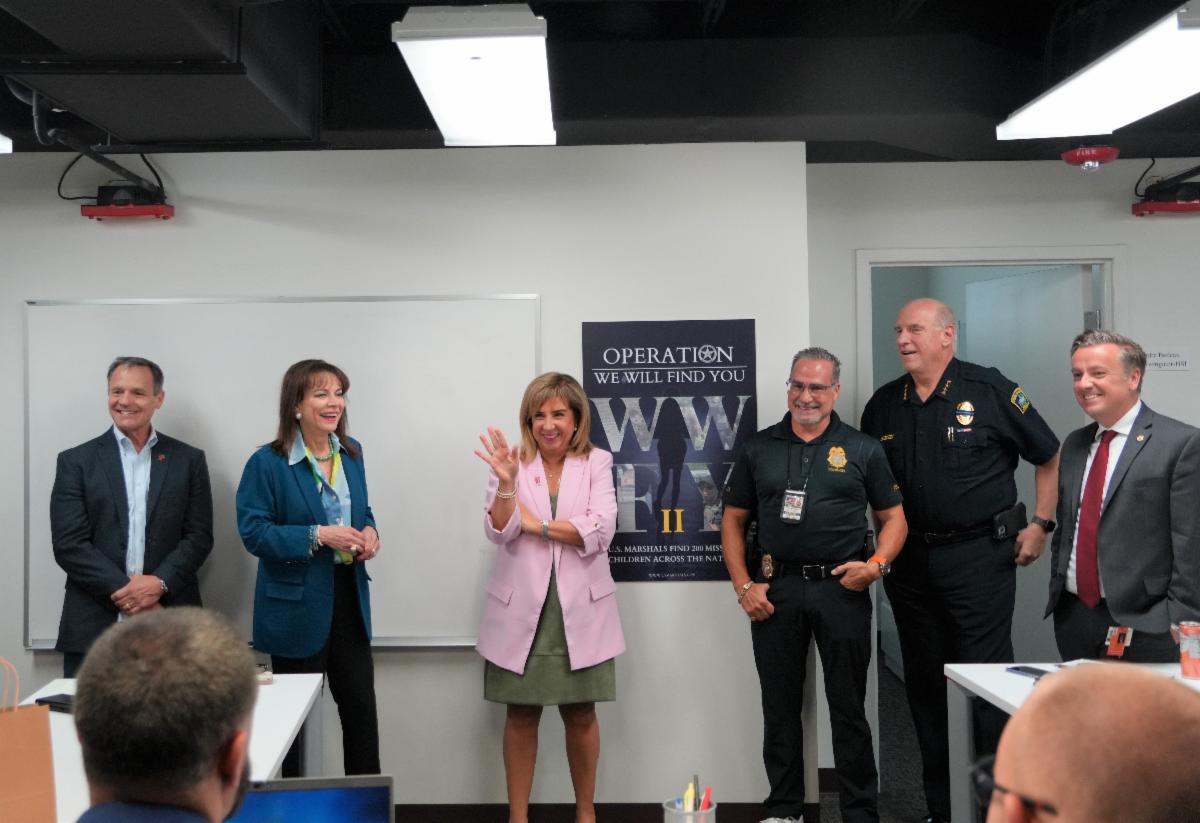
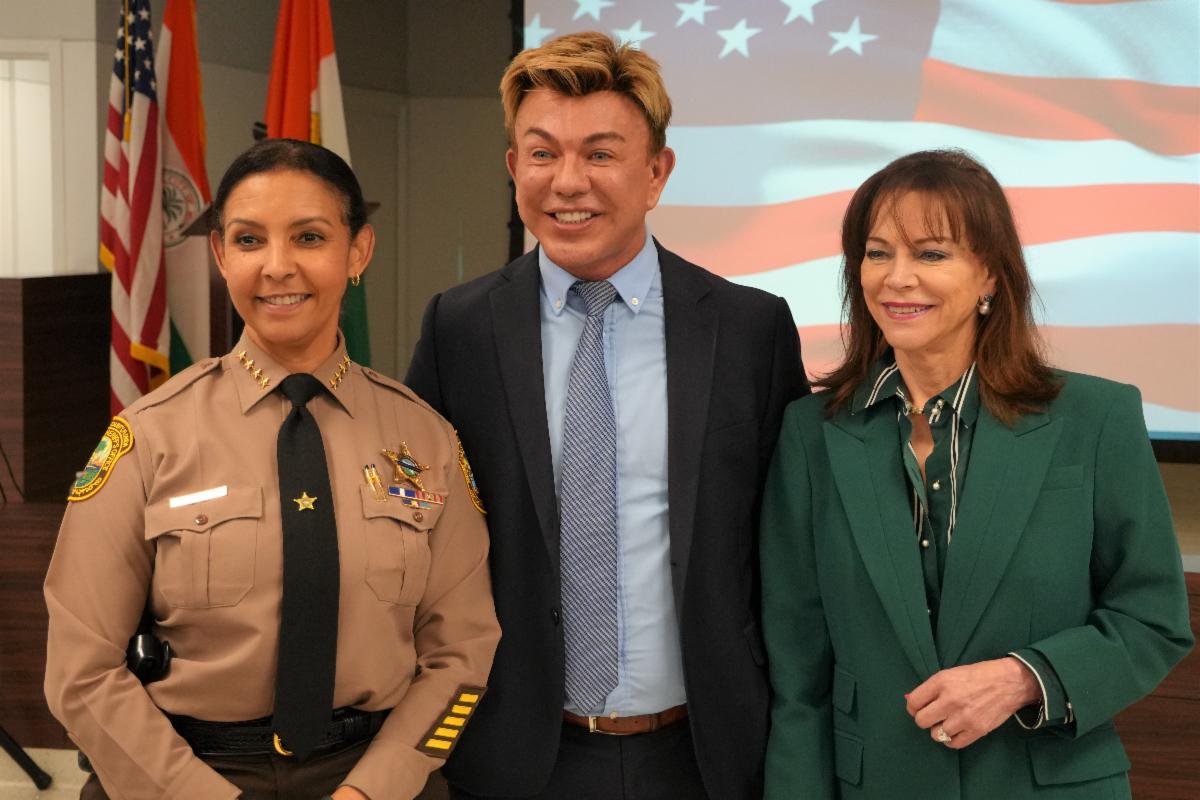
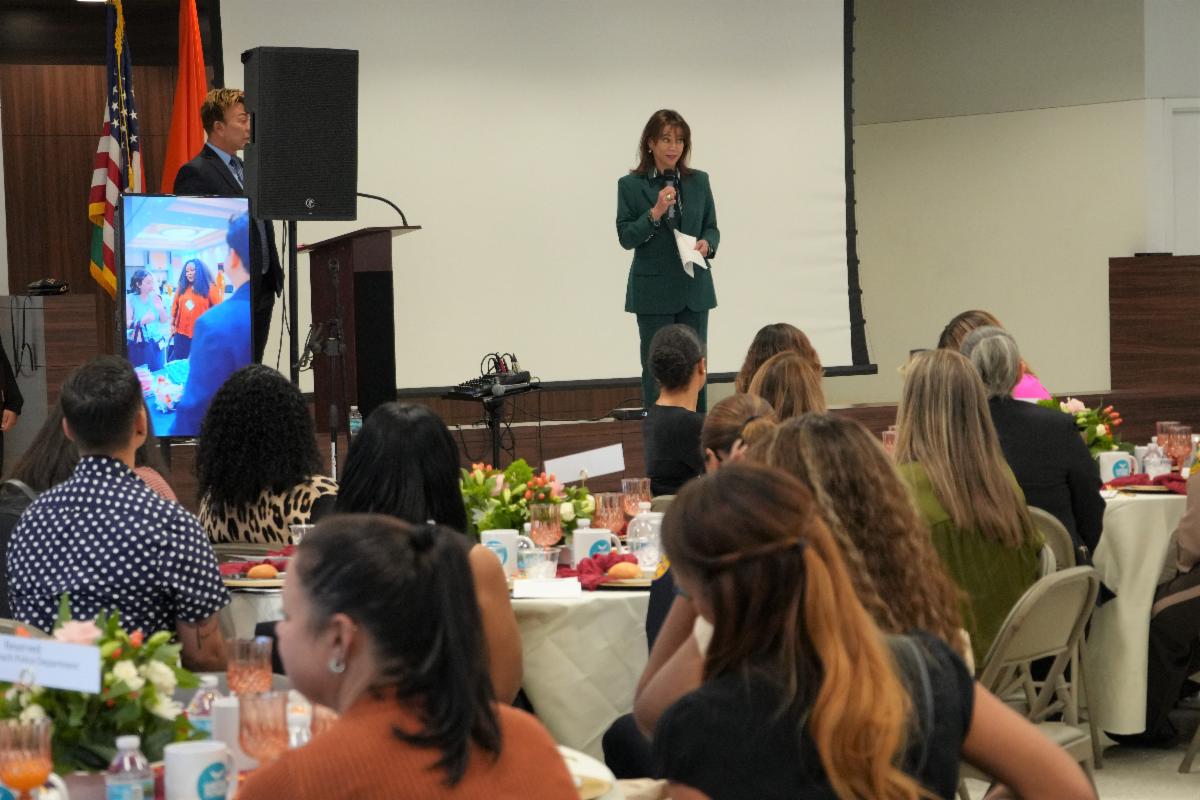
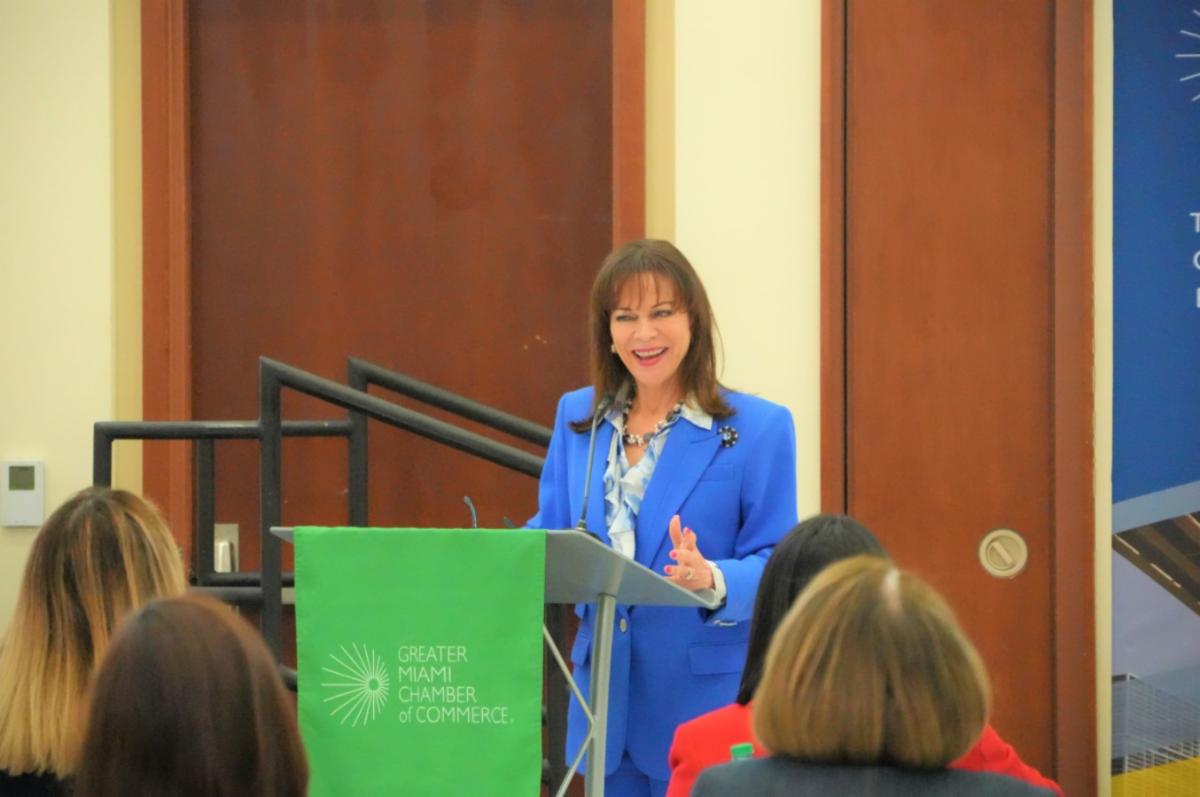
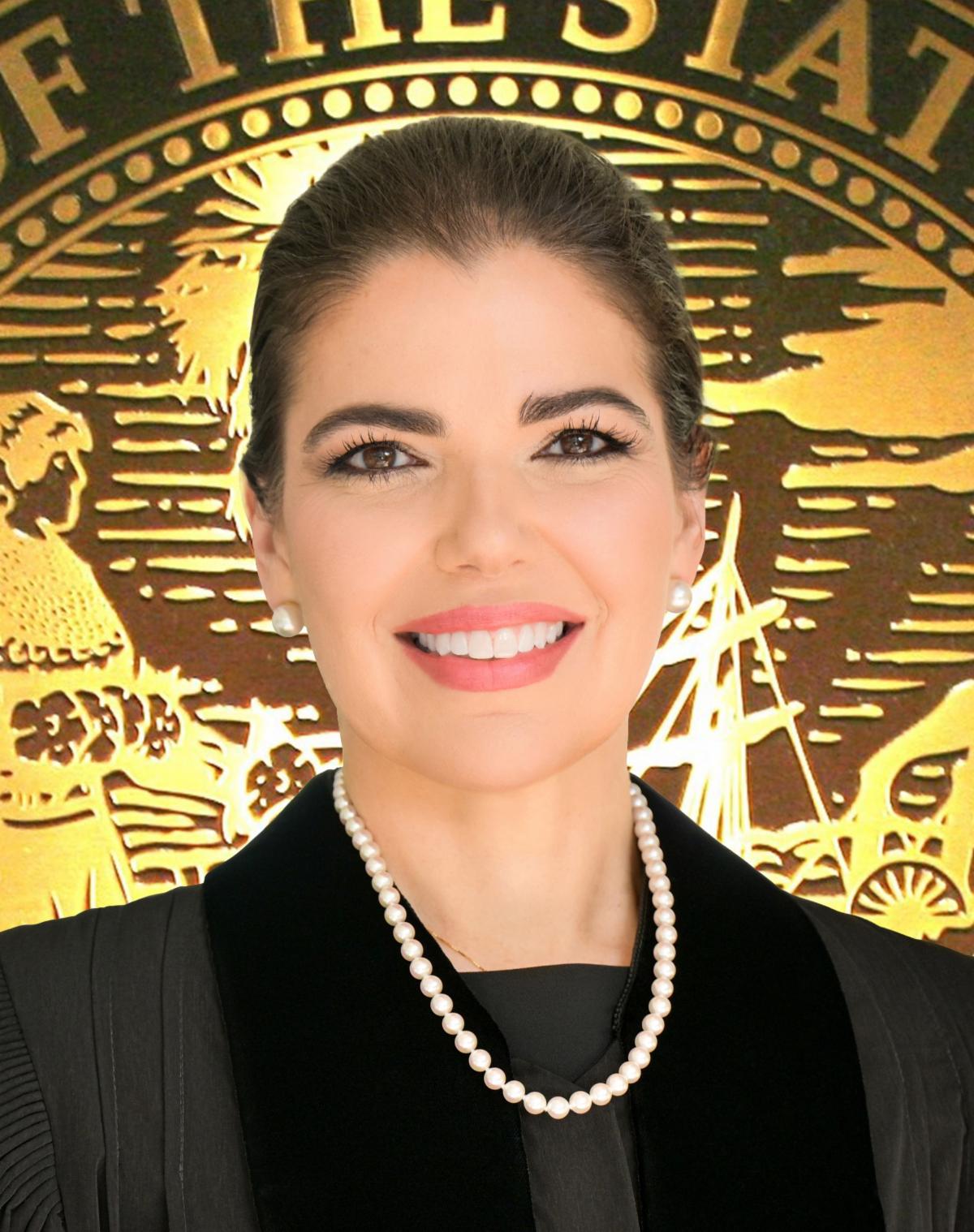
Faith, humility, wisdom, and integrity are a few words that describe Judge Marie E. Mato. As a prosecutor, she exemplified all the qualities that one should have as a minister of justice. A career in law was not what she had originally intended, but divine intervention guided her to her true purpose.
Judge Mato was born in Miami to Cuban exile parents who had originally immigrated to New York. They came to Miami in 1969 where they later raised their daughter and younger son. Judge Mato attended St. Michael the Archangel Catholic School and then Our Lady of Lourdes Academy where she remains an active alumna and has served as a mentor for their Mock Trial team. She went on to earn an undergraduate degree from the University of Miami where she graduated magna cum laude with a double major in Broadcast Journalism and Political Science with a minor in English.
She was planning a career in journalism and interned at Univision, a national Spanish language network. “I was looking for work in journalism and there were no opportunities at that time. So, my neighbors’ granddaughter suggested that I apply at the SAO,” she explains. “I did and in November 1995 I became a Victim Witness Counselor. I was working there just to make money while I waited for a job in the journalism field.”
“As a Vic Wit, I got to see trials and the criminal justice system in a different way than when I was in journalism. I got to see things from another angle, and I was fascinated. I was always interested in seeking the truth and in the pursuit of justice. At first, I thought it would be as a journalist and then I discovered that I could achieve that as a prosecutor.”
During her last semester at UM, one of her college friends asked her if she had signed up to take the LSAT. “I told him I hadn’t, and he suggested that I should. I took his advice and took the exam just to have it in my back pocket as an option, just in case.”
After a two-year gap and a year into working at the SAO, Judge Mato began law school at the University of Miami’s night program. “I worked at the office during the day and then studied law in the evening. I got to see some great cases and great trial lawyers in the courtroom. I got to study the law in theory and then see it in practice which was incredible. I worked as a counselor until 1998 and then switched to full time during my last year of law school, including interning at the SAO.”
Upon graduating cum laude in 1999, Judge Mato received an offer from the SAO and one from a private law firm. “I went into private practice because the money was hard to turn down. I worked in the litigation department at Weiss Serota for little over a year. They were and are a very reputable firm with great people. I was very grateful for the opportunity to work with them. In fact, during my judicial campaign they were very supportive, and I consider Joe Serota a mentor. However, I was doing research and writing as a first-year associate, and I wanted to be in the courtroom. There is nothing like it. I knew I wanted that experience and so I reached out to the SAO to see if I could join the office.”
In March 2001, Judge Mato took a 50% pay cut and joined the SAO. “It was a huge pay cut, and my father thought I was crazy, but he supported my decision and later realized it was my calling.
She worked her way up through County Court, Juvenile and into the Felony Divisions. In 2003 Judge Mato joined the Career Criminal Division known as CCR. “I loved it because of the types of cases I was handling and the opportunity at that time to appear before a variety of different judges who each had their own style. After two years in CCR, Chief Assistant Jose Arrojo recruited me to be a Division Chief. Though I loved CCR, the move would allow me to focus on homicide cases, supervise and mentor younger lawyers, and provide me a raise that would bring me back to the salary I had in private practice.”
During her time at the SAO, Judge Mato became the longest serving and one of the most respected Division Chiefs, supervising easily over 100 young attorneys. Many prosecutors sought her legal advice and counsel on their cases and their trials. They came to her especially in cases where prosecutorial discretion was possible. She was also highly respected by the defense bar and the judges in whose courtrooms she practiced.
“I tried approximately 100 cases to verdict. Of those, 26 were homicides and I thankfully never lost a homicide case in trial. I tried many high-profile cases and worked with some great Senior Trial Counsels and Division Chiefs. There were so many great cases I tried over the years, including the case of Jason Mitchell, the mastermind behind the felony murder of Sean Taylor; the 1994 homicide of Lynn Friend, a woman who was killed by her ex-husband Clifford Friend and whose body was never recovered but yet was successfully prosecuted 30 years later; the 2009 stabbing death of Juan Carlos Rivera, a student at Coral Gables Senior High killed by fellow student Andy Rodriguez; and the sexual battery case against Sir Michael Mapps, a cold case DNA hit with a pro se defendant that I successfully tried with my friend and Chief of Sexual Battery Natalie Snyder, 30 years after the crime.”
“A prosecutor gets to do the right thing every day. It’s not about you, it’s about justice. You have the power as a prosecutor to change a person’s life by the decisions you make. With great power comes great responsibility. How you use your power matters. You change lives. You can bring justice to a victim. You speak for those who can no longer speak for themselves and for the most vulnerable persons in our society. You can bring justice to grieving families who have lost their loved ones. You can also give someone charged with a crime the opportunity to turn their lives around when it’s appropriate. In cases where you realize that the wrong person was arrested, or the
evidence is not there or not what you thought it was you have the ability to dismiss a case and make things right. The majority of cases a prosecutor handles are not in the limelight, but the “average case” is not average but rather very important to the parties involved. It is in the day to day that a prosecutor has the most impact and changes lives.”
Judge Mato is proud of her time at the SAO and is grateful for the opportunity to serve our community in that role for almost 24 years and adds, “I was never asked to do anything illegal, unethical or something that I didn’t believe in. I was always asked what I wanted to do and what I thought was the right thing to do and I got to do it.”
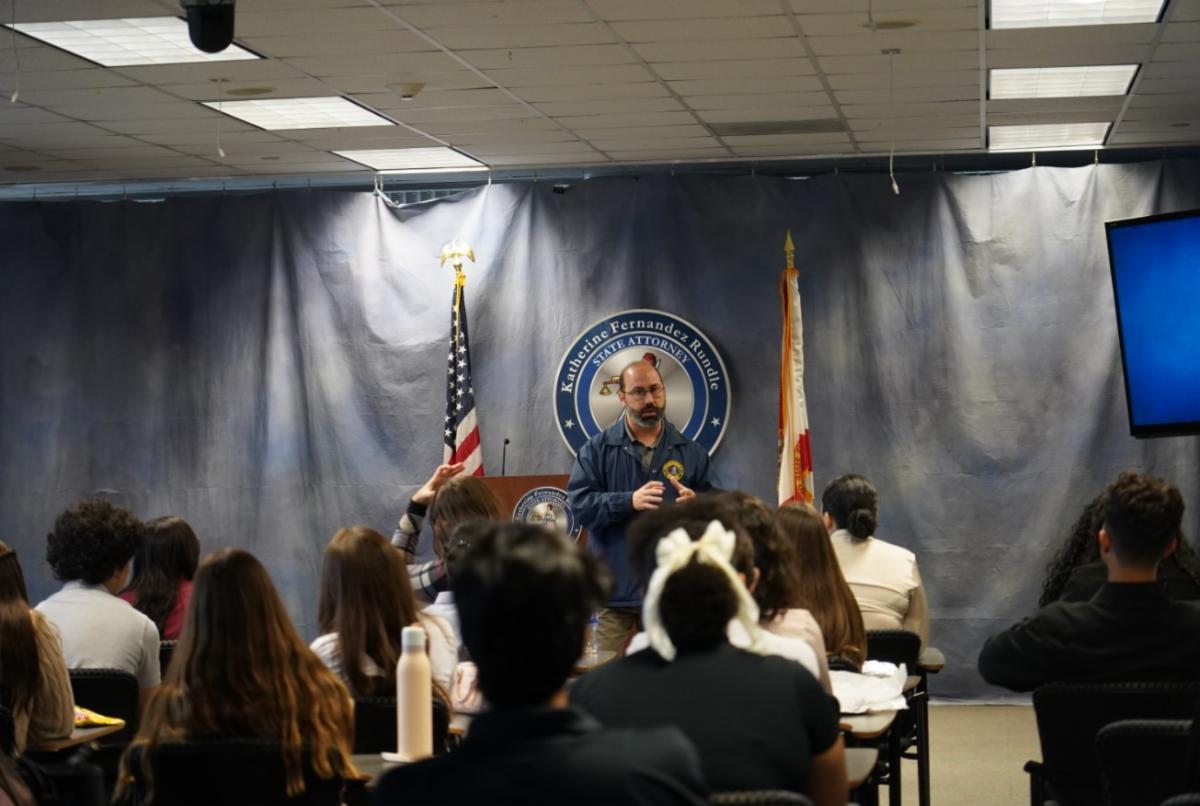
“As a prosecutor, I always respected Judge Mato’s steady, centered nature which allowed her to handle the everchanging range of feelings, sentiments and events always connected with her criminal cases,” said State Attorney Katherine Fernandez Rundle. “Her natural instincts combined with her wide span of experiences working directly with crime victims always gave Judge Mato a perceptive understanding of each person she interacted with. These are all characteristics which should serve her well on the Circuit Court bench.”
She was also very involved in the Cuban American Bar Association (CABA) and served as the CABA Briefs editor. She was a board member and a two-term consecutive President of the League of Prosecutors. She also served on The Florida Bar, years ago on a Florida Bar Grievance Committee and in 2023 on The Florida Bar Board of Governors as a liaison appointed by then Florida Bar President Scott Westheimer. Judge Mato has received numerous awards and recognitions for her work including Prosecutor of the Year awards from the Miami-Dade Chiefs of Police, the League of Prosecutors, and Mothers Against Drunk Driving (MADD).
Judge Mato was also asked by State Attorney Katherine Fernandez Rundle to represent the office at parole hearings. “These are a reminder that a case may be done but not really done. When these hearings come up, I would supplement the parole file with reports and other information. Everything is case by case and the families of victims as well as of inmates have a chance to speak before the Parole Commission votes.”
In April 2020 during COVID, judicial vacancies arose and Judge Mato applied for judicial appointment in County and Circuit Court. She felt she was ready for that next step. She did not receive a gubernatorial appointment but got a taste for the process. She knew that if God’s plans were for her to serve on the bench that the right time would come. Once COVID was under control and everyone returned to in-person work at the SAO, she decided to focus on trying or closing the homicide cases that had been waiting for their day in court. It was not until 2023 that a unique opportunity presented itself when Judge Teresa Pooler announced she would be retiring at the end of her term. This created an open seat in Circuit Court. Judge Mato decided to seek election to that seat. She won without drawing opposition to the Circuit Court, which is a rare feat.
After serving as prosecutor since March 2021 and a Division Chief from June 2005 through December 2024, Judge Mato began her judicial career in January 2025 in the Domestic Violence Division. “Being a judge gives you a different vantage point. You are no longer an advocate. Our job is to give the parties their day in court and follow the law. Starting my tenure in DV has been a very good place to begin and to get my judicial sea legs, to develop my temperament as a judge. I handle civil injunctions which means that most of the parties are pro se. These are all bench trials, so I get to ask questions. I have learned that it is extremely important not to jump to conclusions and to keep an open mind until I hear and see all the evidence.” She adds, “As a judge in DV Circuit Court, I have presided over 270 bench trials and have reviewed thousands of petitions for injunctions. The issuance of an injunction, even a temporary one during signing duty, has serious consequences. Since temporary injunctions are done on an emergency, ex parte basis, a judge has to assume that the allegations in the petition are true and grant an injunction if the facts as alleged in the petition meet the criteria under the law. You don’t get to ask questions of a petitioner or respondent during signing duty. However, your decision can strip a parent temporarily of custody over his or her child/children or evict a respondent from his or her home. Although many times injunctions are a necessary life-saving tool, sometimes the process is used to gain leverage in family court or simply to evict someone from a home without going through the eviction
process. Until the case goes to final hearing, a judge does not have the opportunity to fully know the evidence and determine the credibility of the parties. It is a responsibility I take very seriously.”
Throughout her career and her life, Judge Mato has relied on her strong family bonds and her faith. She is a board member on the Miami Catholic Lawyers Guild and serves on its Faith and Practice Committee. “My faith guides me every day, keeps me grounded and reminds me that the work is not for my glory. It keeps me humble. These aren’t my cases. I am simply a steward for a period of time. It is important to serve a greater purpose than yourself, to do good when you can, and treat people as you would want to be treated… with respect and a level playing field. To apply the law requires wisdom, discernment, a sense of justice and an adherence to due process.”
Her passion for life, the law, and humanity are palpable. She has built her legal career through dedication, professionalism, and a commitment to do what is right.
Judge Mato’s advice to young prosecutors is: “So many cases are dramatic, so you don’t need to make them more dramatic. It is important to stay cool under pressure, be prepared, stay focused on the task at hand, and don’t take it personally. Understand the process and the role that everyone plays in it. We all have a job to do. Be open to the evidence wherever it leads, and you will be able to discern what the truth is in each situation.”
“Be prepared and know the points that you want to make. Be authentic because the jury has to trust you and your message. Be methodical in explaining jury instructions. It is the law that applies in the trial and the jury needs to understand the law that applies and how you have proven your case.”
“Overall, you have to be professional, prepared, and treat everyone with respect. Do what is right even when no one is looking. Doing what’s right is its own reward. You will develop your reputation by what you do every day like responding to emails, returning phone calls, turning over discovery, and how you behave in court just calling the calendar. Doing those simple tasks well will basically make you a superstar because not everyone does it. Get involved in a voluntary bar organization, a charity of your choice, get to know your colleagues on both sides of the aisle, and learn about the community you serve.”