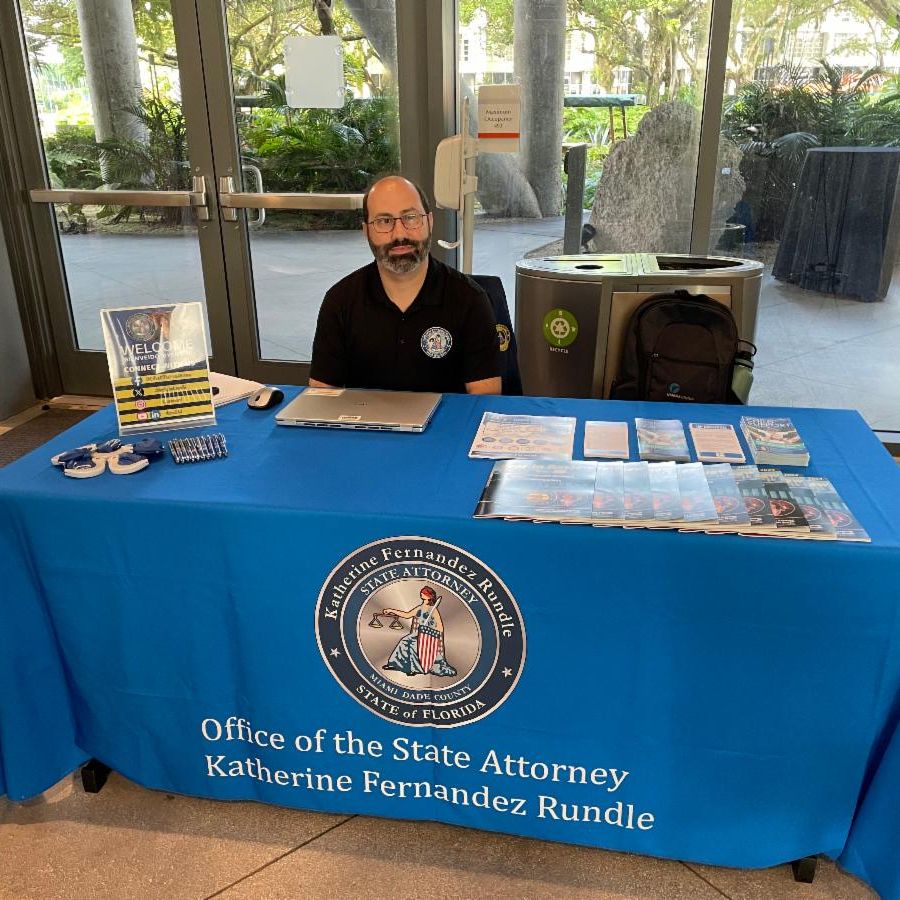
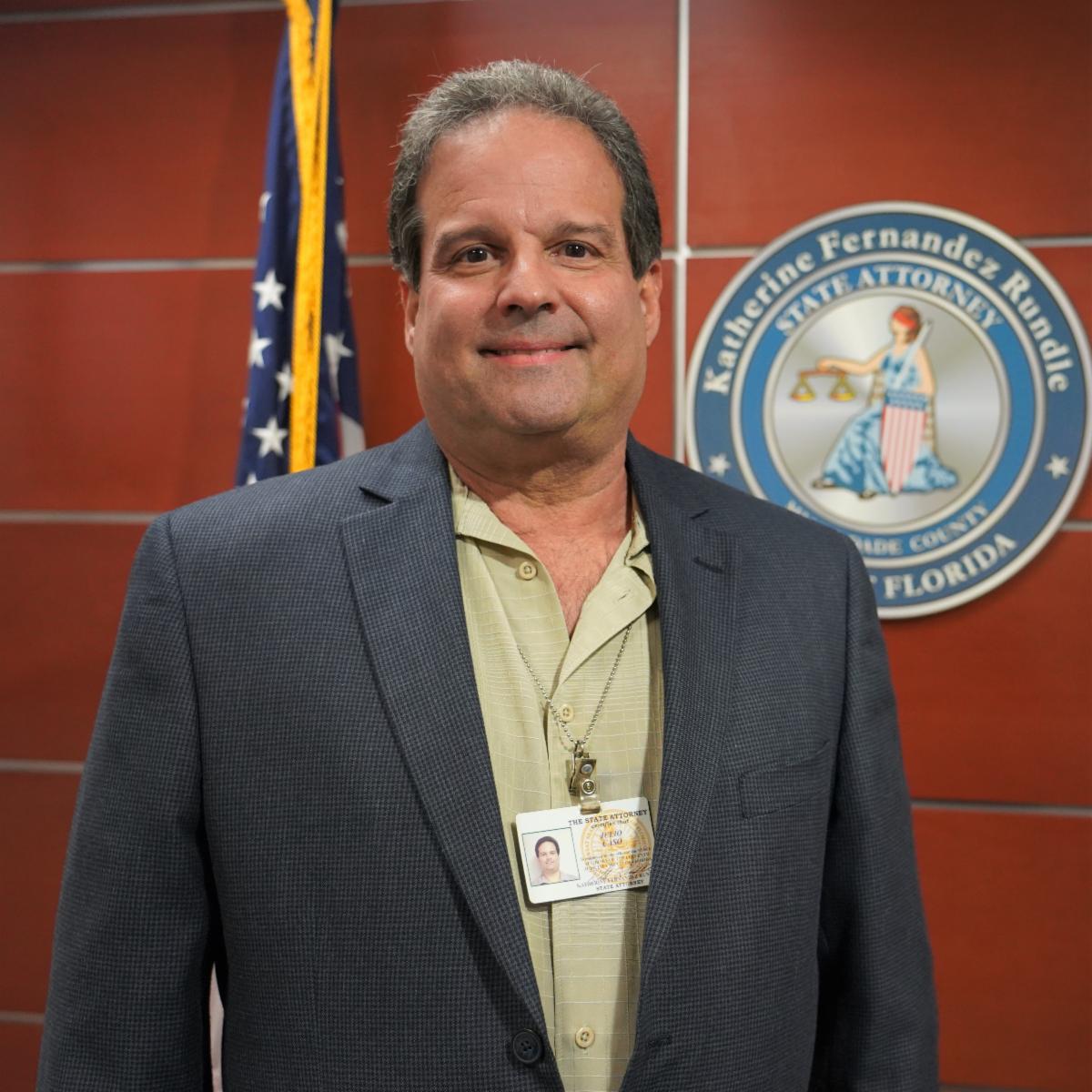
Dealing with victims of crime is something that we do every day at the State Attorney’s Office. We strive to treat them with the respect and attention that they deserve in order to seek justice for the harm they have suffered at the hands of another. Our trauma-informed prosecution model seeks not to cause any additional trauma as we work to make the victim whole again. Nowhere is this more evident than in our Domestic Violence Unit, which is comprised of some very special people who have dedicated their careers to helping others. One of the most beloved is Julio Caso, who for the past 33 years has been a paralegal in our Felony Domestic Violence Unit.
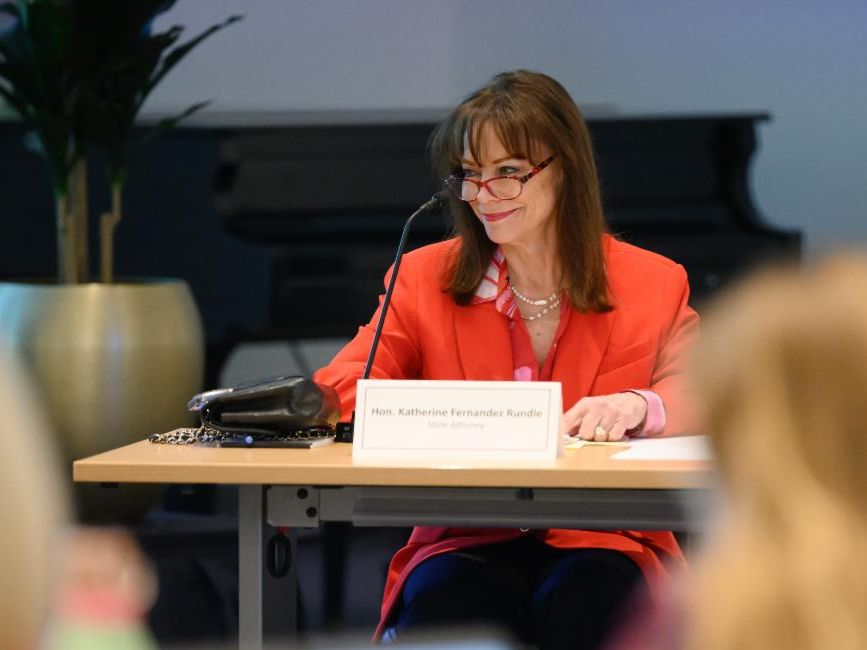
“Every domestic violence case is a turbulent sea of emotions involving anger, jealousy, love, and fear, often ignited by drug and alcohol issues,” said State Attorney Katherine Fernandez Rundle. “It takes a special talent to break through these emotional barriers, to help victims and witnesses feel more at ease in ending the relationship violence happening behind closed doors. Julio Caso has this talent, and I know that such a skill has helped save lives.
Born in Havana, Cuba, Julio came to the United States at age two along with his parents and younger sister. The family later added a younger brother who was born in Miami.
“When I was a kid, I wanted to be a cop,” says Julio. “I think it was the excitement, catching bad guys and doing good for the community.
Julio grew up in the City of Miami and later in Coral Gables. He graduated from Loyola Senior High School and went on to earn his associate’s degree from Miami-Dade Community College (now MDC).
While working as an agent at a travel agency, Julio married and decided to look for more stable work in government. “The agency was going out of business, and I started applying to government jobs. In 1992, I was hired at the State Attorney’s Office to work the front desk. Back then, it was on the 6th floor of the courthouse. I did that for six months.”
He then applied to and was hired as a Victim Witness Counselor. A year and a half later, there was an opening for a paralegal position in the Felony Domestic Violence Unit. He applied and has been there ever since.
“I enjoy talking to people, knowing that I can help them. We are saving lives,” he says. Even though he didn’t become a police officer, Julio has been able to fulfill his dream of keeping the community safe while holding accountable those who abuse others who find themselves in a vulnerable state. “I’m surprised by cases that we see. I have seen victims get cut, burned, and more. How can someone who is supposed to love you do such things to you? Some cases are unbelievable, from a minor thing to an atrocity.”
As a paralegal in Domestics, Julio has a great deal of responsibility when handling cases. “If we mess up, it could cost someone’s life. It is serious business, and we do everything we can to help our victims.”
Once police have made an arrest, the affidavit is reviewed by a Domestic Violence Unit prosecutor and assigned to Julio or another paralegal. “I interview the officers, the victim, and any witnesses. I take their statements and then I review all of that with the prosecutor and propose what charges seem most appropriate. The lawyer makes a charging decision, and then I create the information, the charging document that is filed with the court.”
Victims are then assigned to one of our DART counselors who help them connect to the services they may need.
“We see people from all socio-economic groups, including lawyers, doctors, and other professionals. Some people don’t report right away or don’t report at all because they are embarrassed, but that doesn’t help the situation. Sometimes they try to excuse the behavior of the abuser by saying that he usually isn’t like this, and it only happened because he was drinking. Sometimes there is a financial dependency on the abuser or the fear of having the abuser deported, or they themselves being deported. There can also be community or cultural pressure to not report or ‘break up’ the family.”
Julio emphasizes how important it is for him to be able to offer guidance and advice to the victims who may not realize that the cycle of violence only escalates if they do not act and cooperate with the criminal case. “You try to speak with them with compassion and sweetly because they have gone through a traumatic experience. I try to get them to accept the help.”
“It’s heartbreaking to see repeat victims. Sometimes you can talk some sense into them about proceeding with the case, especially after you have interviewed them three or four times because of separate DV incidents.”
Because of the rapport that Julio establishes with victims, they feel safe enough to open up and take steps to end the cycle and begin again. Over the years, he has received calls from former victims thanking him for helping them.
Though most of the victims of Domestic Violence cases at the SAO are women, about 20% of our victims are male. This number has grown over the years as more men report, yet according to Julio, they are even less likely than women to proceed with cases against their abuser.
“I remember a case where the victim was a man, and the woman took out his eye. He dropped the charges, wouldn’t cooperate, and hid her in his house,” Julio recounts.
Even after handling thousands of cases over his more than three decades at the SAO, Julio continues to serve our victims with the same passion and commitment that have made him an invaluable member of the Domestic Violence unit. His supervisors and Administrator cannot speak more highly of what he brings to the team, and he is beloved by his colleagues.
“I like what I do, and I still find it rewarding. I work with a great group of people. Many of them have been with her for 15 years or more. I can’t imagine being anywhere else.”
We are proud to have Julio Caso as a member of the SAO Family and as our Profile in Passion.
For more information about our Domestic Violence Unit, please call (305) 547-0140 or visit our website miamisao.com.